


Communication With The Media, Delivered By Commissioner Ahmet Prençi Regarding The Findings From The Monitoring Of The Protest On October 20th
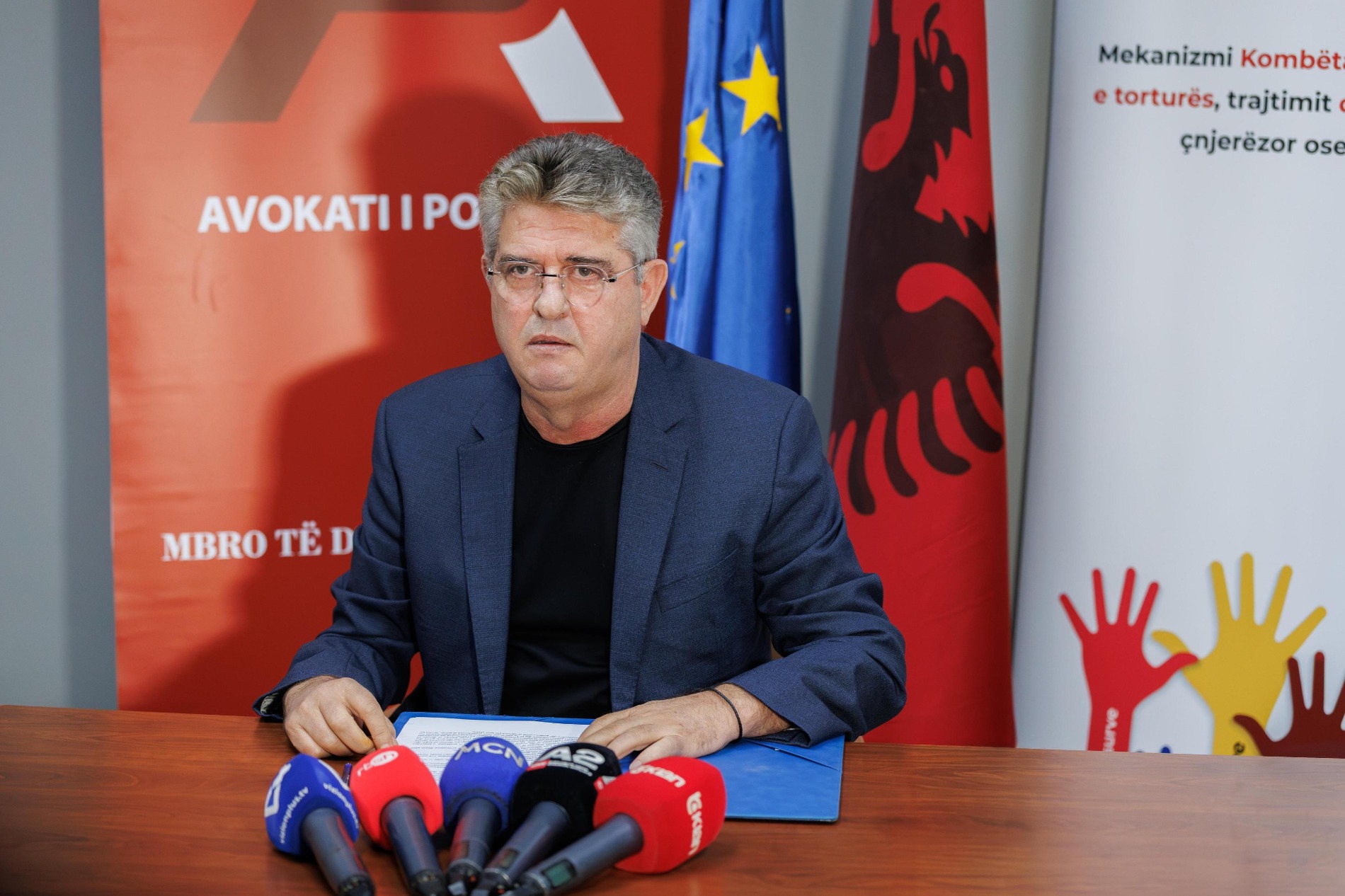
PRESS RELEASE
Monitoring of the October 20, 2026 Protest
Tirana, October 21, 2026
Ahmet Prençi – Commissioner
Head of the National Preventive Mechanism against Torture
Today, October 21, in my capacity as Commissioner for the National Preventive Mechanism against Torture—a unit within the Office of the Ombudsman—I am providing an update on our findings from the monitoring conducted on October 20 regarding the observance of human rights during the protest, as well as the treatment of individuals who were detained or injured. These are preliminary findings. A more in-depth investigation is ongoing, and we will provide further updates within the legally mandated timeframes.
1. Scope of Monitoring
Throughout the day on October 20, teams from the Office of the Ombudsman inspected Police Station No. 2, the Security Block (detention facility), and the Trauma Hospital. Police Stations No. 1, 5, and 6 held no detainees at the time of inspection and are therefore not included in this monitoring report.
2. Figures
- Police Station No. 2: 2 adult males, both of whom were released while the monitoring was underway.
- At the time of the inspection, there were 118 individuals in the Security Block, 36 of whom had been arrested within the preceding hours. This facility currently houses 6 minors. Six complaints were received from arrested individuals.
- Trauma Hospital: 6 protesters—one of whom is a minor—received medical treatment, compared to 34 individuals treated the previous day.
- Yesterday, 6 complaints were filed alleging violence that occurred on October 20th, all within the Security Block (detention facility).
3. Findings and Legal Basis
3.1 Allegations of Violence and Use of Force
Allegations of violence during detention or escort procedures were reported within the Security Block. In one instance, a head injury was reported, and in another, an eye injury. Footage released from the protest raises concerns regarding individuals being dragged and struck with rubber batons. Citizens have provided us with footage showing violence perpetrated by the police during detention and escort procedures. We are currently analyzing and investigating these incidents to hold those responsible accountable. Furthermore, members of the public have contacted us via telephone to report instances involving the use of force, which are now under review.
Standard: Article 3 of the European Convention on Human Rights (ECHR) prohibits torture and inhuman or degrading treatment. Article 11 protects the right to peaceful assembly. The use of force must be lawful, necessary, and proportionate.
3.2 Treatment in the hospital
At the Trauma Hospital, an arrested person remained hospitalized, handcuffed to the bed, with a police officer present in the room. He alleged that he had been subjected to violence during his arrest and had sustained a severe eye injury.
Standard: Articles 3 and 5 of the ECHR require protection against ill-treatment and the observance of safeguards during deprivation of liberty. Any physical restraint must have a legal basis, be necessary, and be documented.
3.3 Conditions and overcrowding
During the inspection of the Security Unit, it was observed that rooms intended for one person were housing 3 to 4 individuals. According to reports, at least two people were sleeping on the floor. The official capacity of the Security Unit is 67 persons, yet we found 118 arrested individuals there.
Standard: Article 3 of the ECHR prohibits inhuman or degrading treatment. The Strasbourg Court has established a minimum space requirement of 3 m² per prisoner in multi-occupancy cells. The standards of the European Committee for the Prevention of Torture (CPT) require provision for sleeping space, water, hygiene, and medical care.
3.4 Minors
During the monitoring process, we made contact with 6 minors. However, at the Security Block where they are held, we were unable to identify a separate room for children. The complaints received concerned restrictions on contact with family and legal counsel, as well as the absence of a psychologist during questioning.
Standard: Article 37 of the Convention on the Rights of the Child requires humane treatment and special protection for any child deprived of their liberty.
4. Our Demands
The right to peaceful assembly is guaranteed by the Constitution. We condemn any act of violence, regardless of the source. The police have an obligation to ensure public safety and, in any intervention, to use force only when necessary and in a proportionate manner.
We call upon the State Police to:
- Immediately secure and preserve video footage from the protest, police stations, and the Security Block; and install cameras—with provisions for the storage of footage—in all holding areas and offices.
- Make available all orders, registers, and data regarding the grounds for detention, the duration of custody, and the identities of the officers involved.
- Ensure the mandatory identification of every officer and vehicle during any operation.
- Document the safeguards provided for the 6 minors and ensure their separation from adults. Clarification regarding the handcuffing of the hospitalized individual: who ordered it, the reasons, and the duration.
From the Ministry of the Interior, we request:
- That measures be taken to ensure the Security Unit operates at its normal capacity of 67 individuals, and that the additional individuals—who are contributing to overcrowding—be relocated to other facilities that meet the required standards.
From the Ministry of Health, we request:
- Doctors must be available at all times within the premises where individuals are held in police custody.
- Medical documentation of any bodily injury is required to facilitate investigations and establish accountability in cases involving inhumane or degrading treatment of protesters.
The Ombudsman will continue to monitor the implementation of these demands. Once responsibility is established, we will call for disciplinary action against the police officers involved and, in cases where we identify violations of the law or potential criminal liability, we will refer the matters to the Prosecutor's Office.
We invite any citizen who believes their rights have been violated during the protest or while in police custody to contact the Ombudsman by filing an individual complaint—via our telephone numbers, our official website, or our social media channels. Confidentiality is guaranteed.